Dora’s death
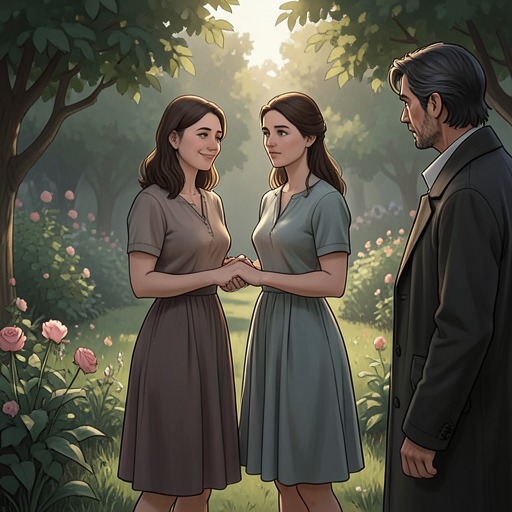
David CopperfieldDora’s death is the end of David Copperfield’s marriage to Dora Spenlow and the point at which his romantic attachment is overtaken by grief and remorse. As Dora faces death, she reflects that her youth and lack of experience had made her unprepared for marriage; David, unable at first to accept that she will die, must confront both her loss and the limits of the life they shared. The scene closes with the deaths of Dora and her dog Jip, while the retrospective narrator presents Agnes Wickfield’s compassion as a sustaining presence in the aftermath.
The Last Conversation
David has been told that Dora will soon die, but knowledge has not become acceptance. He repeatedly withdraws to weep and tries to prepare himself for their separation, yet, holding her hand and feeling her love, he cannot extinguish the hope that she might be spared. His account dwells on this divide between what he has been told and what he can believe: the approaching end remains almost impossible to make real while Dora is still beside him.
Dora asks whether David has ever thought that she was too young. She means more than her years: she sees herself as inexperienced in thought and feeling, and doubts that she was fit to be a wife. She wonders whether they would have been better off loving each other as boy and girl and then forgetting the attachment. David answers that he was no more fit to be a husband than she was. Her self-assessment therefore does not stand as a simple accusation against herself; it gives voice to a mismatch that David, in his grief, cannot dismiss by assigning fault to one of them.
She also imagines how their marriage might have changed with time. In her view, she might have tried and disappointed David, and he might eventually have loved her less. She calls their present circumstances better than that imagined future, even as death is taking her from him. The thought is tender and unsettling: the marriage’s ending is devastating, but Dora can picture a longer life together as a source of disappointment rather than fulfilment.
A Private Message for Agnes
Dora asks David to send Agnes Wickfield to her, alone, and to keep everyone else away while they speak. David gives her message to Agnes, though he cannot readily leave Dora in his grief. Before Agnes comes, Dora holds him and repeats that it is better as it is: she believes David could not have loved her more than he does now, and that the years might have brought disappointment. Her final reflections thus combine affection for him with an awareness of her own limitations and of the fragile fit between them.
Once downstairs, David sits by the fire beside Jip’s little house. In the bright moonlight he thinks remorsefully about the secret feelings he has nursed during the marriage and recalls small moments between himself and Dora. The memories make him recognize how much ordinary trifles contribute to a life together. From them rises his first image of Dora, still enriched by the young love they felt for one another. His recollection does not erase his later doubts; it holds the beloved beginning alongside the knowledge that their shared life was difficult and unequal in its maturity.
Jip’s Death and Dora’s Passing
Jip, more restless than usual, crawls from his house, looks at David, and wanders to the door as if wishing to go upstairs. David tells him not to go that night. Jip returns slowly, licks David’s hand, and raises his dim eyes to his face. David then fears that the dog may never see Dora again. Jip lies down at his feet, stretches out as if to sleep, gives a plaintive cry, and dies. His death comes in the same vigil as Dora’s, making the beloved companion’s final movement toward David a small, immediate loss within the larger crisis.
Agnes appears with an expression of pity and grief, tears on her face and one hand raised toward Heaven. David calls to her; then darkness comes before his eyes, and for a time his memory is blotted out. The account does not describe Dora’s death in that instant from David’s conscious perspective. Later, when he can bear to hear what happened, he learns that during his swoon Dora died with a smile on Agnes’s bosom. The narrative therefore makes Agnes both the witness to Dora’s last moments and the person who meets David as he returns to consciousness.
Mourning and Retrospective Meaning
Looking back, David describes how the full weight of grief developed gradually rather than arriving all at once. For a time, he could rest in what was innocent and beautiful in the story of his marriage; later, he came to feel that his future was closed and that his life’s energy had ended. His account distinguishes the first shock from the deeper sorrow that followed, preserving the delay between losing Dora and understanding the extent of the loss.
Agnes’s influence also shapes the response to Dora’s death. David recalls an earlier association between Agnes and a stained-glass window in a church, which he retrospectively reads as foreshadowing her role in his calamity. From the moment she stood before him with her hand raised, she seemed to him a sacred presence in his lonely house. When he awoke from his swoon, her tears, words of hope and peace, and compassionate face softened his pain. The image does not undo Dora’s death; it shows how the scene places the beginning of David’s recovery beside the fact of his bereavement.
After Dora’s burial, David waits for the final resolution of Uriah Heep’s affairs and the emigrants’ departure before going abroad. He does not claim that travel immediately restores him. Instead, the departure belongs to the period in which others, especially Agnes, help shape a course through grief. Dora’s death thus closes their marriage while opening the narrative’s account of mourning: David must carry both the cherished image of his child-wife and the painful recognition that love alone had not made them equally prepared for married life.